Tattoo aftercare: what to do, day by day
Most tattoos fail in the first two weeks, not in the chair, and almost always for the same three reasons: too much moisture, too much friction, or too much picking.
The short version
- Wash with clean hands and unscented soap two or three times a day, pat dry, then leave it alone.
- Second skin film stays on 3 to 5 days total. Wash and dry needs a thin ointment for about 4 days, then plain lotion.
- Surface healing takes 2 to 3 weeks. Flaking, itching and a cloudy matte look at week two are all normal.
- Spreading redness, heat, thick yellow discharge or a fever after day three is not healing. Call the studio and a doctor.
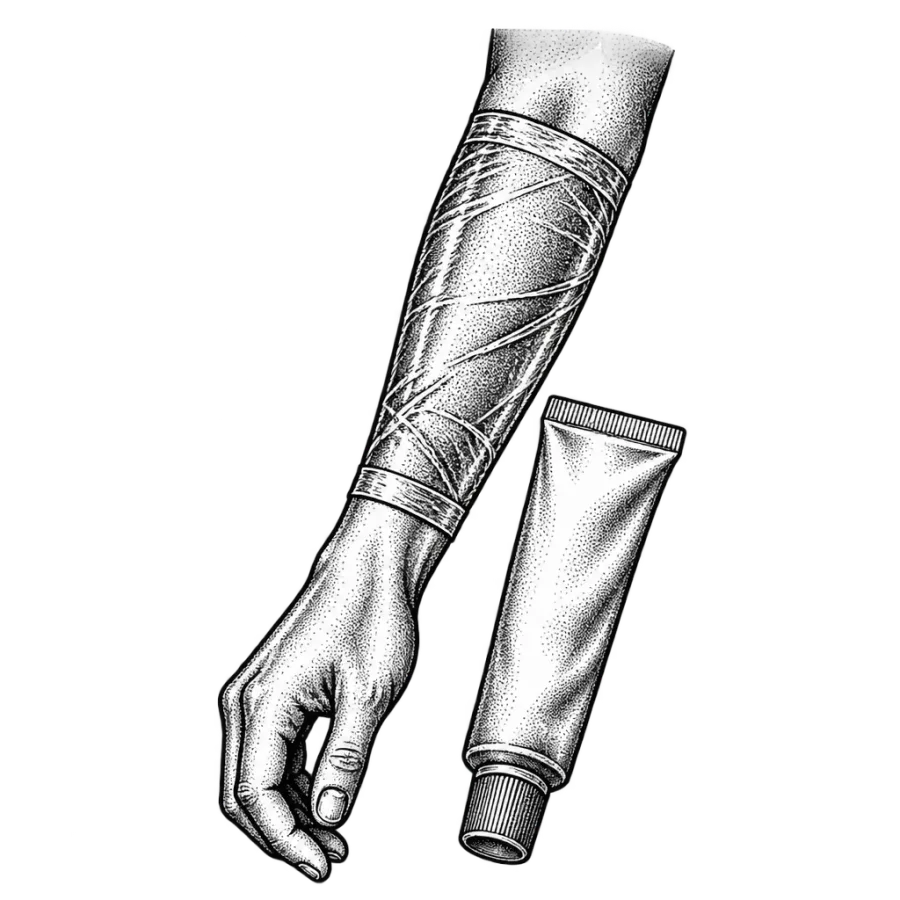
Your artist controls the first four hours. After that the tattoo is yours, and the healed result depends on what you do with it for the next fourteen days. Aftercare is not complicated. It is a short list of unglamorous habits: keep it clean, keep it barely moist, keep it out of water and sunlight, and leave the scabs alone.
There are two accepted methods and studios argue about them constantly. Second skin film, a breathable adhesive dressing left on for several days, and the traditional wash and dry method with a thin ointment. Both work. Neither is magic. The one that fails is the hybrid, where somebody wraps a healing tattoo in cling film every night because it feels productive.
The first 48 hours
Leave whatever your artist put on you exactly as it is until the time they gave you. With a traditional wrap that is usually 2 to 6 hours. With second skin film it is longer, often 24 hours for the first piece, because day one produces the most plasma. Unwrapping early to show a friend is the most common mistake in tattoo aftercare and it is entirely self inflicted.
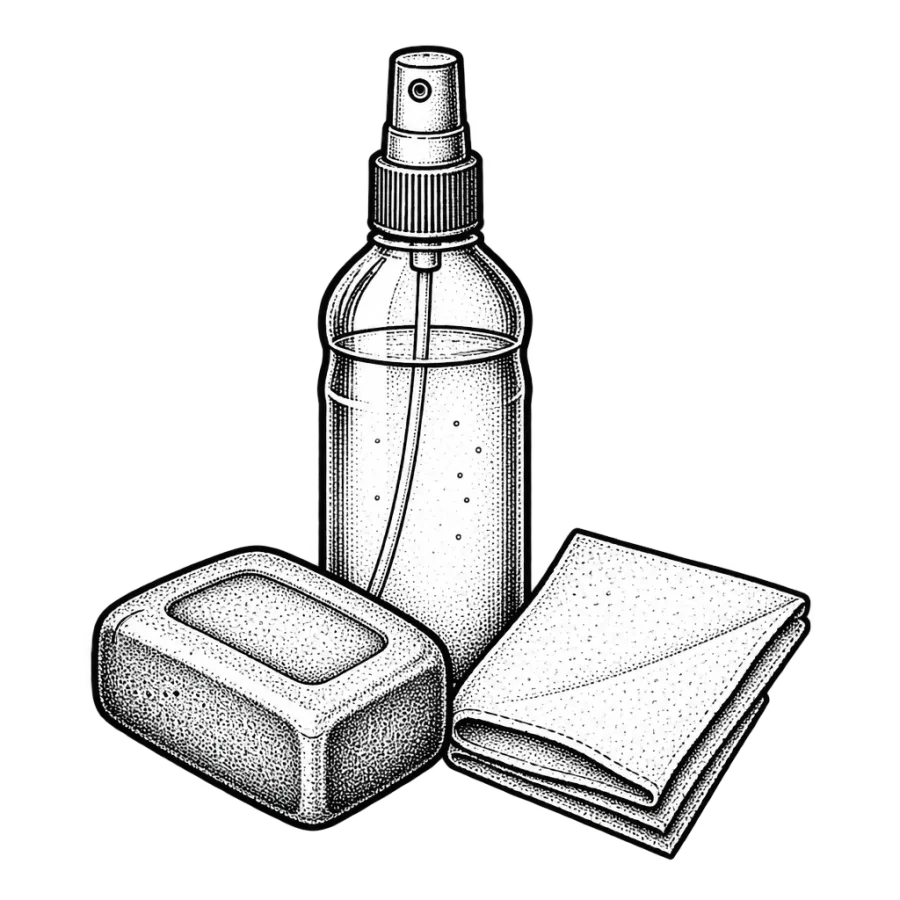
The first wash matters. Clean hands, lukewarm water, a small amount of unscented liquid soap, and your fingertips only. No washcloth, no loofah. You are removing plasma, excess ink and ointment, not scrubbing skin. It will feel slippery and look alarming. Rinse until the slipperiness is gone, pat dry with a clean paper towel, and let it air for ten minutes before anything touches it.
Your first night
- Sleep on sheets you do not mind staining. Ink and plasma will transfer.
- Wear an old shirt over a new torso piece, not one you like.
- Skip alcohol on day one if you can. It thins blood and keeps the piece weeping.
- No gym, no sauna, no pool, no bath.
Second skin film, step by step
Second skin is a thin breathable polyurethane film sold under a dozen brand names. It traps plasma against the tattoo, which keeps the wound moist and usually means less scabbing and a cleaner looking heal. Most artists apply the first piece in the studio and expect you to remove it at around 24 hours, wash the tattoo, and apply a second piece for another 2 to 4 days.
Removing it dry hurts and can pull ink out with it. Do it in a warm shower. Find a corner, pull the film back flat against your skin, low and slow, in the direction of hair growth, while running water into the gap. Then wash the tattoo normally. There will be a jelly like layer of plasma underneath and it will smell slightly metallic. That is expected.
Film is a bad fit when
- You have a known adhesive allergy, or eczema or psoriasis at the site.
- The piece sits on a high friction joint like the inner elbow and the film keeps lifting.
- The tattoo is on a hand, foot or anywhere the edges cannot seal flat.
- You sweat heavily at work and the film fills within hours.
The traditional wash and dry method
This is the method every studio used before film existed and it still heals beautifully if you are disciplined. Wash two or three times a day. After each wash, once the skin is completely dry, apply a layer of ointment so thin you can barely see it. A healing tattoo needs to breathe far more than it needs to be buttered.
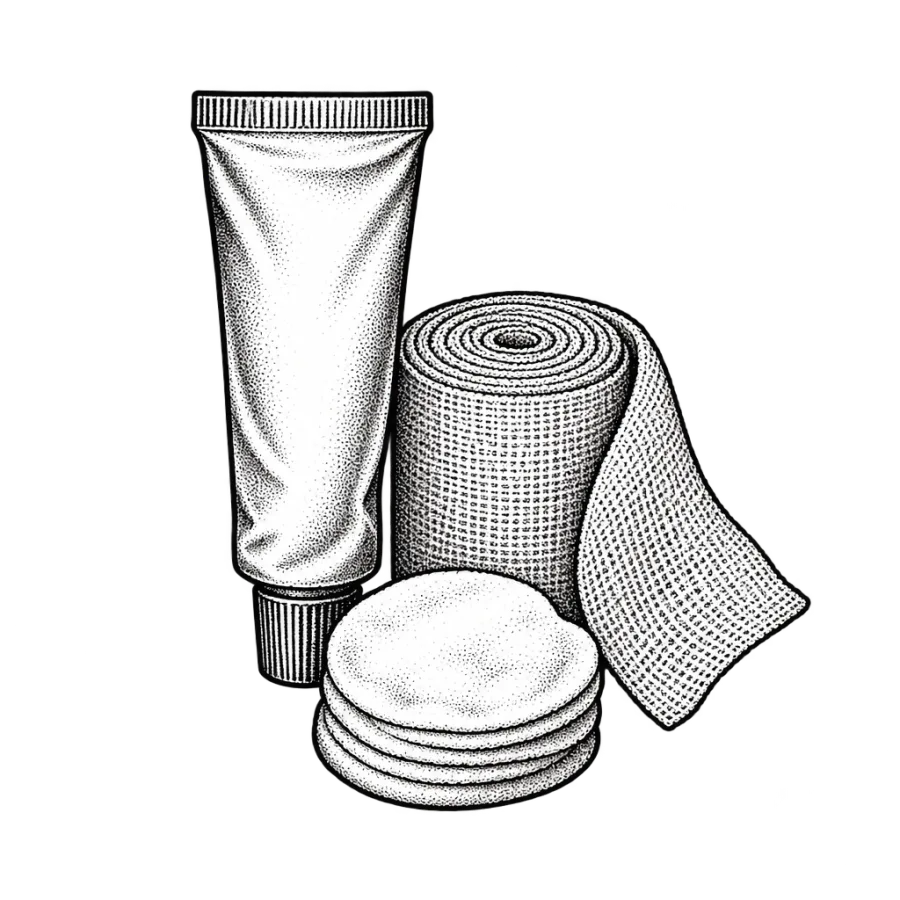
Use a fragrance free healing balm or a plain unscented ointment for the first 3 to 5 days, then switch to an unscented lotion for the rest of the flaking phase. Avoid anything perfumed, anything with added vitamin E, and thick petroleum jelly used as a seal. Too much product is the classic error here: a shiny, sticky tattoo scabs thicker and itches more.
How much ointment is enough
- A rice grain for a 5 cm piece, a pea for a full forearm panel.
- Rub it in completely, then blot off anything that still looks wet.
- Two or three times a day, not every time you walk past a mirror.
- Stop the ointment once flaking starts and move to plain unscented lotion.
What normal healing looks like, week by week
Week one looks like a wound because it is one. Week two is when people panic. The new layer of skin over the tattoo is thicker and less transparent than the layer you will end up with, so everything looks foggy, dull and slightly grey. Nothing has gone wrong. That haze clears somewhere between day 18 and day 30 as the new skin thins out.
Colour saturation looks worst around day 12. Bright reds and yellows can seem to have half disappeared. Judge nothing until week four, and judge a touch up at week six or eight, which is when most artists will look at the piece and fix any spots that dropped out.
| Stage | Days | What you see | What to do |
|---|---|---|---|
| Open wound | 1 to 3 | Red edges, plasma weeping, ink on the wrap | Wash 2 to 3 times a day, thin ointment or film |
| Flaking | 4 to 10 | Dry skin lifting in coloured flakes, tightness | Unscented lotion, no picking, no scratching |
| Cloudy itch | 10 to 21 | Matte, dull, milky look over the colour | Keep moisturising and wait it out |
| Settled surface | 21 to 30 | Colour returns, texture evens out | Normal washing, daily SPF 30 once closed |
| Deep remodel | 30 to 90 | Looks finished to everyone but you | Book a touch up at 6 to 8 weeks if needed |
Infection versus normal irritation
Every healing tattoo is red, warm, swollen and tender for two or three days. That is inflammation and it is supposed to happen. The pattern that matters is direction. Normal irritation gets a little better every day. An infection gets worse after day three, and it usually gets worse fast.
The real red flags are redness spreading out past the tattoo, heat you can feel from a few centimetres away, thick yellow or green discharge with an odour, hard swollen lumps, red streaks running away from the site, or a fever over 38 C, which is 100.4 F. Any of those means a doctor the same day, not a studio message on Monday.
Message your artist, not a forum, if
- A section of colour lifted with a scab and left a pale patch.
- The film has been leaking for more than a day.
- You have a raised itchy rash in one ink colour only, often red.
- The piece is still weeping plasma on day five.
What to stop doing for two weeks
The failures we see at the front desk are almost never washing mistakes. They are lifestyle mistakes. Swimming is the big one: pools, lakes, oceans and hot tubs are all open water on an open wound, and two weeks of patience is cheaper than a course of antibiotics and a patchy reheal.
The second is friction. A waistband over a hip piece, a bra strap over a fresh shoulder, a backpack on a new upper back, a watch over a wrist tattoo. Friction lifts scabs early and pulls ink out with them. Plan your clothes around the placement before you book, not after.
The two week no list
- No swimming, baths, hot tubs, saunas or steam rooms. Showers are fine.
- No direct sun, and no sunscreen on broken skin either. Cover it with cloth.
- No gym for 48 hours minimum, and nothing pressing on the piece for a week.
- No picking, scratching or peeling flakes that are still attached.
- No shaving over it, and no pets sleeping against it.
Aftercare by placement
Generic advice gets you most of the way. Placement decides the rest. Hands and fingers heal fast and lose ink fast, because you wash them thirty times a day and that skin turns over quickly. Expect a touch up there and treat it as part of the deal rather than a mistake.
Feet and ankles swell and rub against shoes, so wear open footwear for a week. Ribs and the stomach flex constantly, which means slower healing and worse itching. Inner elbows and the backs of knees crease with every movement and scab heavier than flat panels. Anything under a bra band or a waistband needs looser clothing than you think it does.
Questions people ask
How long does a new tattoo take to heal?
The surface closes in 2 to 3 weeks for most people, which is when the flaking stops and the skin feels normal to touch. The deeper layers take about 3 months to settle fully, and that is when the colour looks its truest. Large, heavily saturated pieces and joint placements sit at the slower end of both ranges.
Can I shower with a new tattoo?
Yes, from the first day. Short lukewarm showers are fine and you should wash the tattoo while you are in there. What you cannot do is soak it, so no baths, pools, hot tubs or long steam sessions. Keep the shower under ten minutes, avoid blasting the piece directly, and pat it dry with a clean paper towel afterwards.
Why does my tattoo look faded and cloudy at two weeks?
Because a fresh layer of skin has grown over the ink and it is thicker and less clear than the skin you will end up with. The ink has not gone anywhere. That milky look usually clears between day 18 and day 30. Do not book a touch up over it before week six, and do not send your artist a panicked photo at day 12.
What should I put on a new tattoo?
As little as possible, and nothing scented. A thin layer of fragrance free healing ointment for the first 3 to 5 days, then a plain unscented lotion until the flaking ends. Skip thick petroleum jelly, skip antibiotic creams unless a doctor prescribes one, and skip anything sold as a tattoo brightener. None of it improves the heal.
Is it normal for a tattoo to scab?
Light, thin scabbing is normal with the wash and dry method and often means the colour is packed well. Thick, raised, cracked scabs are not, and they usually come from too much ointment, too little washing, or a knock. Never pick. A scab pulled off early takes ink with it and leaves a pale gap you will be paying to fix.