How tattoos heal: the timeline and the biology
Ink stays in your skin because your own immune cells keep failing to remove it, and that quiet stalemate is the entire reason a tattoo is permanent.
The short version
- Ink sits 1 to 2 mm deep in the dermis, held inside immune cells that cannot digest it.
- Surface healing runs 2 to 3 weeks. Full dermal remodelling takes around 3 months.
- The cloudy week two look is new epidermis sitting over the ink, not lost colour.
- Judge the finished result at 4 weeks, and book any touch up at 6 to 8 weeks.
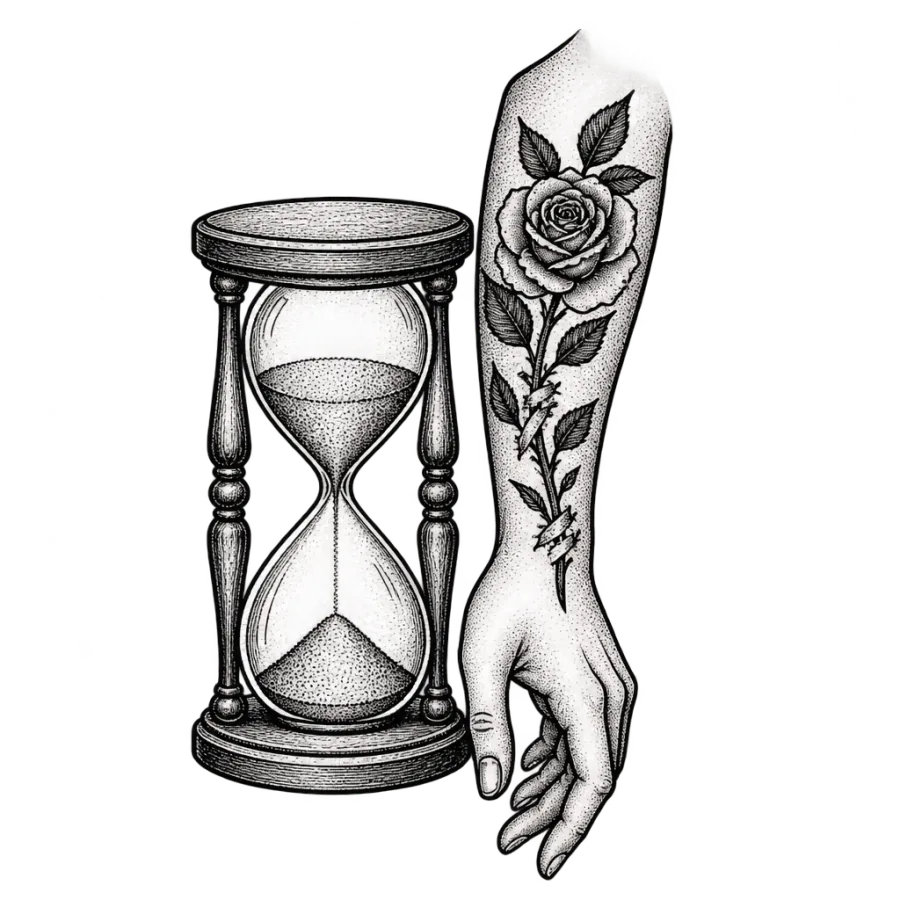
A tattoo machine punctures skin roughly 50 to 150 times a second and deposits pigment about 1 to 2 mm down, through the epidermis and into the dermis. That depth is the whole trick. The epidermis replaces itself every few weeks, so ink left there would simply wash out. The dermis barely turns over at all.
What follows is a standard wound healing response with one strange twist. Your immune system arrives to clear the debris, swallows the pigment particles, and then cannot break them down or carry them away. The cells holding the ink eventually die in place, neighbouring cells take up the same pigment, and the pattern holds for decades.
What the needle actually does
A liner or shader runs at roughly 100 to 140 strokes per second and the artist controls depth entirely by hand. The target is the upper dermis, about 1 to 2 mm below the surface depending on where you are on the body. Eyelid skin is under half a millimetre thick. The skin across your back is closer to 3 mm. Same machine, very different touch.
Too shallow and the pigment sits in the epidermis and sheds within a month, which is why a whole line can vanish during healing. Too deep and the ink spreads sideways through looser tissue, which is what a blowout is: a grey haze beside a line that will not tidy itself up with time.
The immune response that makes a tattoo permanent
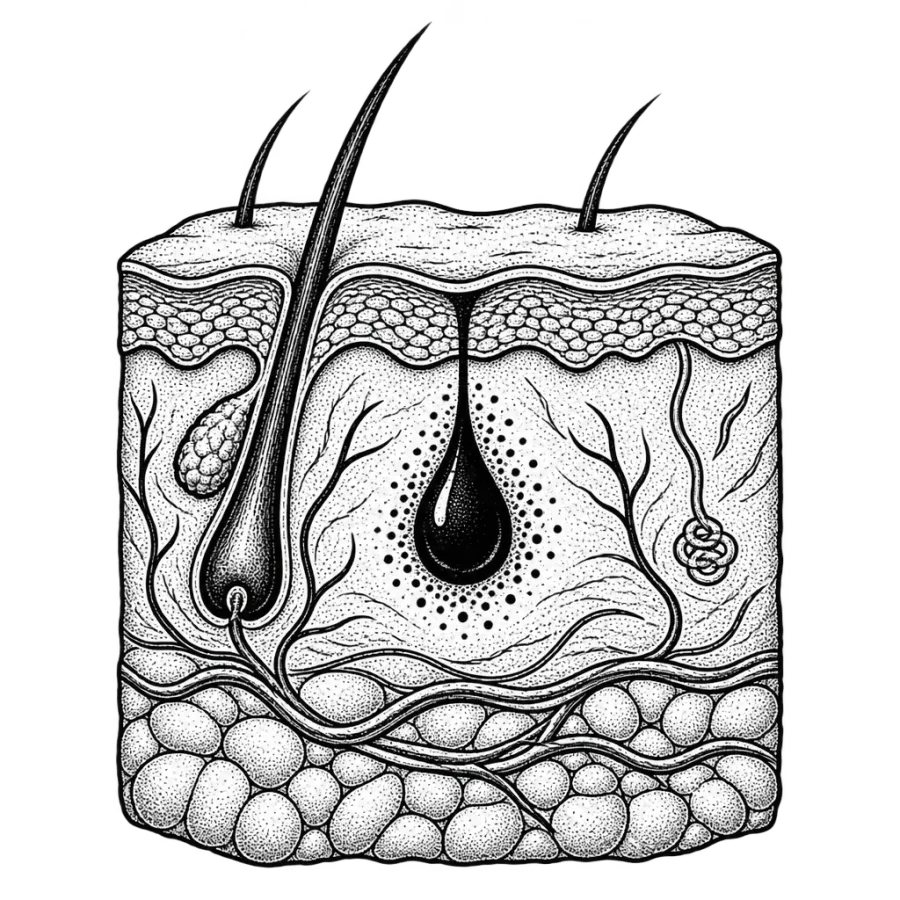
Within hours, macrophages, the cleanup cells of the immune system, move into the punctured area and engulf the pigment particles. Tattoo ink is made of insoluble solids, carbon black and various organic and metallic compounds, in particle sizes the body has no enzyme for. The macrophage swallows a particle and then gets stuck holding it.
The current best explanation is a capture and recapture cycle: a pigment carrying cell eventually dies, releases its load, and a fresh macrophage takes the same particles straight back up in the same spot. That is why a tattoo stays sharp for a lifetime even though no individual cell does. It is also why laser removal works, because breaking the particles small enough finally lets the cells carry them away.
The timeline, phase by phase
Days one to three are pure inflammation. Blood vessels widen, fluid leaks into the tissue, and the area is red, hot and swollen. Plasma weeps out and dries into the shiny film you find on the wrap. This is the phase people mistake for infection most often, and the difference is simply that inflammation peaks around day two and then improves.
From day three to day ten, new skin cells migrate across the wound and rebuild the epidermis. That new skin is what flakes off. From roughly day ten to day twenty five you are looking at your tattoo through a layer that has not thinned out yet. Almost everybody thinks their tattoo is ruined during this window and almost nobody is right.
| Phase | Days | In the skin | On the surface |
|---|---|---|---|
| Inflammation | 1 to 3 | Vessels dilate, immune cells flood in | Red, warm, swollen, weeping plasma |
| Proliferation | 3 to 14 | New epidermis grows across the wound | Flaking, itching, thin scabs |
| Cloudy window | 10 to 25 | Fresh epidermis is thick and opaque | Dull, matte, milky over the colour |
| Maturation | 25 to 60 | Collagen reorganises, new skin thins | Colour sharpens, texture evens out |
| Settled | 60 to 90 | Pigment stabilises in the dermis | Final look, fair to judge |
Why week two looks like a mistake
The cloudy phase has a nickname in most studios: the silver skin, or the milky stage. The cause is optical, not pigment loss. New epidermis is thicker, less organised and more light scattering than mature skin, so it sits over your tattoo like frosted glass.
Black looks grey. Red looks pink. Fine line work can look like half of it has vanished. As that layer matures and thins over the following two weeks, transparency returns and the colour comes back. If your artist tells you to wait until week four before sending a photo, that is the reason, not because they are avoiding you.
What slows healing down
Healing speed is mostly decided by things you do not control and a few that you do. Blood supply matters, so a forearm heals faster than an ankle because circulation at the extremities is poorer. Age matters, since skin turnover slows steadily from the thirties onward. Smoking constricts blood vessels and reliably drags out every stage.
Density matters too. A solid blackwork panel is far more trauma than a small fine line piece and can take a week longer to close. Diabetes, autoimmune conditions, blood thinners, recent isotretinoin use, and psoriasis or eczema at the site all change the picture. Tell your artist before the needle comes out, not afterwards.
Faster healing, honestly
- Sleep. Skin repair happens overnight and a short week shows on the tattoo.
- Water and food. Healing is a metabolic job, not a cosmetic one.
- No alcohol for the first 48 hours, since it keeps the piece weeping.
- Loose clothing over the site for a full two weeks.
- No sun until the surface is closed, then SPF 30 or higher for life.

How healing differs by style and placement
Heavily packed colour and solid black heal slowest, because much more of the dermis has been worked. A full black panel can weep for four days and flake for two weeks. Fine line and single needle work often close in ten to fourteen days but drop out more easily, since there is less ink in the skin to start with.
Placement shifts the schedule by days. Hands, fingers and feet turn over skin fast and rub constantly, so they heal quickly and hold ink poorly. Ribs, stomach and inner thighs flex and sweat, which means longer weeping and worse itching. Flat low friction areas like the outer forearm, calf and upper back are the easy ones.
When healing goes wrong
Three things actually go wrong. Ink drops out, which leaves pale patches and is fixed with a touch up. Scarring, which comes from being worked too deep or from picked scabs, leaves raised lines that no touch up hides well. And infection, which is rare in a licensed studio and usually traced back to water, dirty hands or a lifted film.
Allergic reactions are worth knowing about. Red pigment is the usual culprit, and the reaction can appear weeks or even years later as an itchy raised rash confined to that one colour. It needs a doctor rather than more ointment. So does any lump at the site that keeps growing after the first month.
Questions people ask
How long does a tattoo take to fully heal?
The surface heals in 2 to 3 weeks and the deeper dermis takes about 3 months. You can swim and sunbathe once the surface has closed and all flaking has finished, usually around week three. The colour you see at three months is the colour you have, and that is the only fair point to judge the work.
Why does tattoo ink stay in the skin forever?
Because it is placed below the epidermis, which sheds, and into the dermis, which does not. Immune cells swallow the pigment particles and cannot break them down, so the ink stays trapped inside cells in the same position. When one of those cells dies, a neighbouring cell takes the pigment straight back up and the image holds.
Is it normal for a healing tattoo to itch?
Yes, usually from day four to day fourteen, and it can be maddening. Itching means new skin is forming. Never scratch or peel. Tap the area firmly with clean fingers, apply a thin layer of unscented lotion, or press something cool against it through a clean cloth. Scratching lifts flakes early and leaves pale gaps in the work.
When can I go in the sun or a pool?
Wait until the surface is fully closed and flaking has stopped, typically 2 to 3 weeks. Water carries bacteria into an open wound, and UV on a healing tattoo fades pigment and can trigger a reaction. After that, sunscreen of SPF 30 or higher over the piece is the single best thing you can do for how it looks in ten years.
How much ink do you lose while a tattoo heals?
A small amount always sheds with the epidermis, which is why artists saturate colour slightly heavier than the final target and why touch ups exist. On most pieces the loss is invisible. On hands, feet, fingers and elbows it can be obvious, and one touch up at six to eight weeks is normal there rather than a sign of bad work.