American traditional tattoo ideas and designs
American traditional is the most durable tattoo style ever worked out, built on heavy outlines, a small palette and shapes that stay readable for decades.
- Pain level5 / 10 on the outer arm
- Healing2 to 4 weeks, color slower
- Typical size8 to 25 cm (3 to 10 in)
- Studio cost$150 to $800
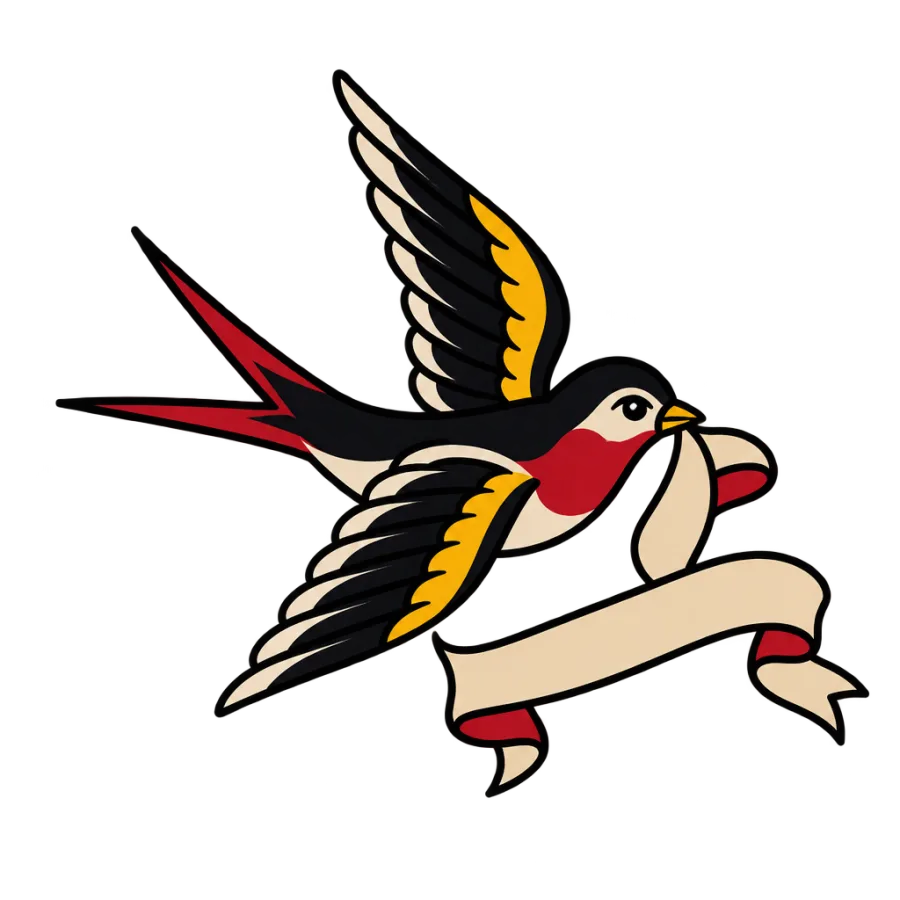
American traditional, or old school, was settled in port town shops through the 1930s and 1940s by artists who needed designs that would still read on a weathered sailor twenty years later. The rules are unusually strict: heavy black outline, flat solid color, minimal shading, and a silhouette you can recognize from across a room.
That restriction is the whole point. Sailor Jerry, Bert Grimm and the shops that followed them built a vocabulary of eagles, roses, daggers, panthers, swallows and pin ups because those shapes survive the two things that ruin tattoos: ink spread and fading. A century of evidence is walking around on people’s arms.
How the style is tattooed
Outlines go in with a 7RL or 9RL, sometimes an 11RL on a large back piece, pulled in one confident pass at fairly high voltage. The line is black, thick and even, usually 1.5 to 3 mm wide. Color is then packed solid with a 15M1 or a 23RM magnum until there is no mottling left, which is why traditional sessions feel heavier than the drawing looks.
Shading is minimal and stylised: a black whip shade under a rose petal, a plain highlight left as bare skin, a hard edge where a modern artist would blend. There is no soft gradient and no airbrushed transition. Everything gets decided at the drawing stage and the machine simply executes it.
A traditional shop setup
- 7RL or 9RL for outlines, 11RL for large scale work
- 15M1 and 23RM magnums for packing solid color
- Five core pigments: black, red, yellow, green and a muted blue
- Black whip shading instead of grey wash
- Bare skin left as highlight rather than white ink on top
Why the classic subjects keep working
The old flash catalogue is not nostalgia for its own sake. A swallow works because the wing shape stays legible at 4 cm. A rose works because the petals simplify into a dozen closed shapes. A panther head works because the silhouette is readable even once the interior detail has blurred.
Modern traditional artists still add new subjects, but they test each one against the same standard. Can it be drawn in closed shapes inside a bold outline, and will it still be identifiable at arm’s length in thirty years. If the answer is no, that subject belongs in a different style.
How traditional ages, and why it wins
A 2.5 mm black outline that spreads by 0.3 mm across fifteen years is still a 2.8 mm outline. That is the secret in one sentence. Bold lines have enough width to absorb natural ink migration without losing their shape, and flat color fields fade evenly instead of going patchy.
Colors do age at different speeds. Black and red hold best. Yellow is the first to go pale, particularly on sun exposed arms. Green and blue soften slowly. Plenty of traditional pieces still look strong at twenty years with one color refresh, and some need nothing at all. White highlights are the exception, since white pigment tends to yellow and sink within a few years.
Size, placement and what it costs
The style is built for the outer arm, chest, calf and back, the classic flash placements with muscle underneath and enough flat area for a bold shape. A sensible minimum is 6 to 8 cm for a simple item, because the outline and the color band alone eat about 5 mm of the design before you draw anything inside them.
Expect $150 to $300 for a small flash piece, $400 to $800 for a half day on a 15 to 20 cm design, and $800 to $1,500 for a full day session on a chest panel or sleeve section. Many shops still sell pre drawn flash at a fixed price, which remains the cheapest honest way into the style.
12 American traditional tattoo designs, with the prompt behind each one
Every design below came out of AI Tattoo Lab. Tap one to load its prompt into the generator, then change a word and make it yours.
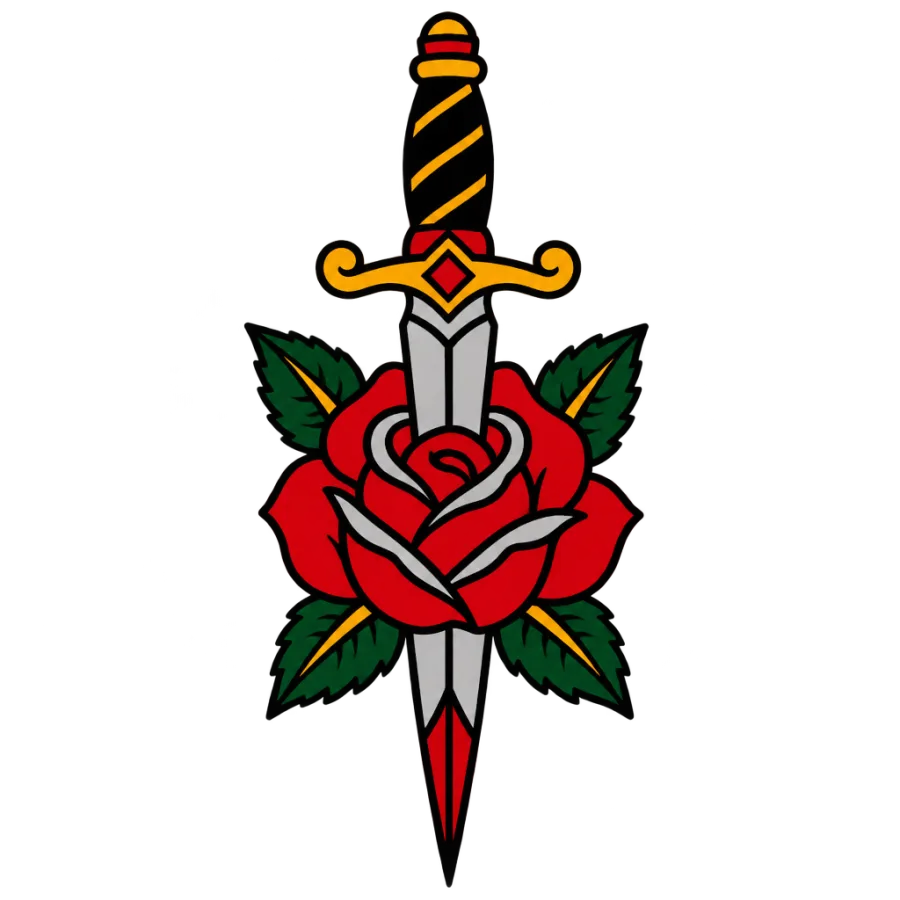
A dagger piercing a blooming red rose, American traditional, bold outlines and solid color
Use this prompt
A snarling black panther head, American traditional, heavy outlines and flat color
Use this prompt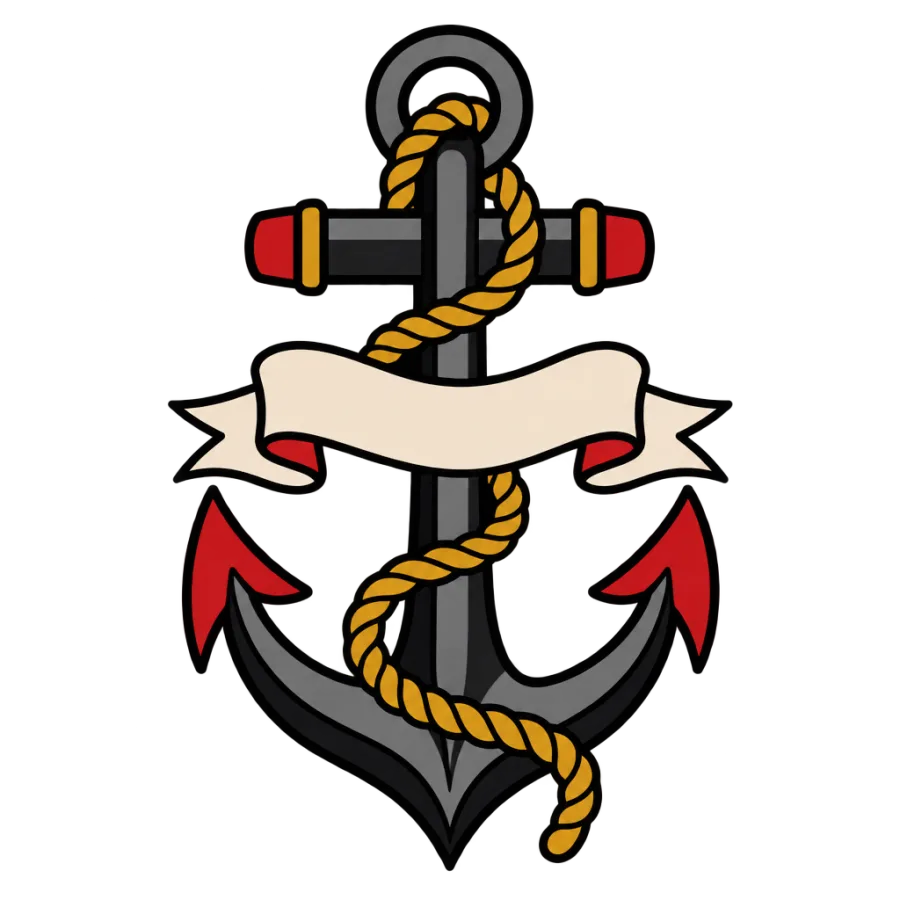
An anchor wrapped in rope with a blank ribbon banner, American traditional, bold outlines
Use this prompt
A nautical star and compass rose, American traditional, bold flat color
Use this prompt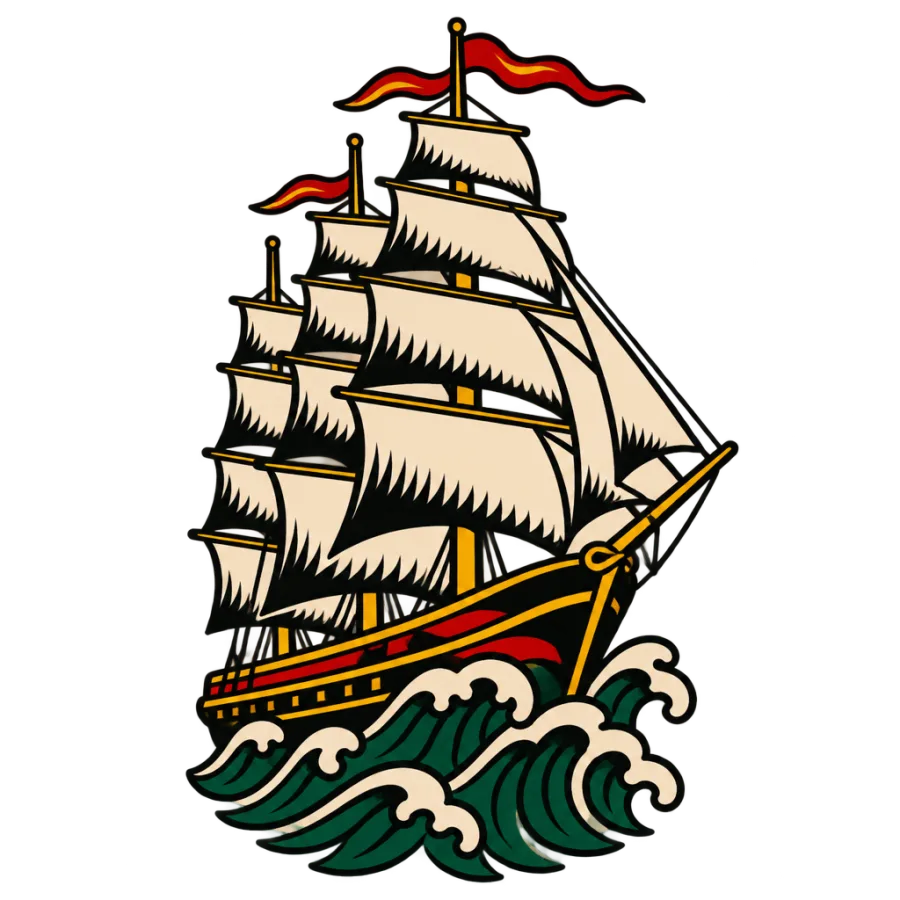
A tall ship with full sails on bold waves, traditional tattoo flash
Use this prompt
A flaming sacred heart with radiating rays, traditional tattoo, red and yellow
Use this prompt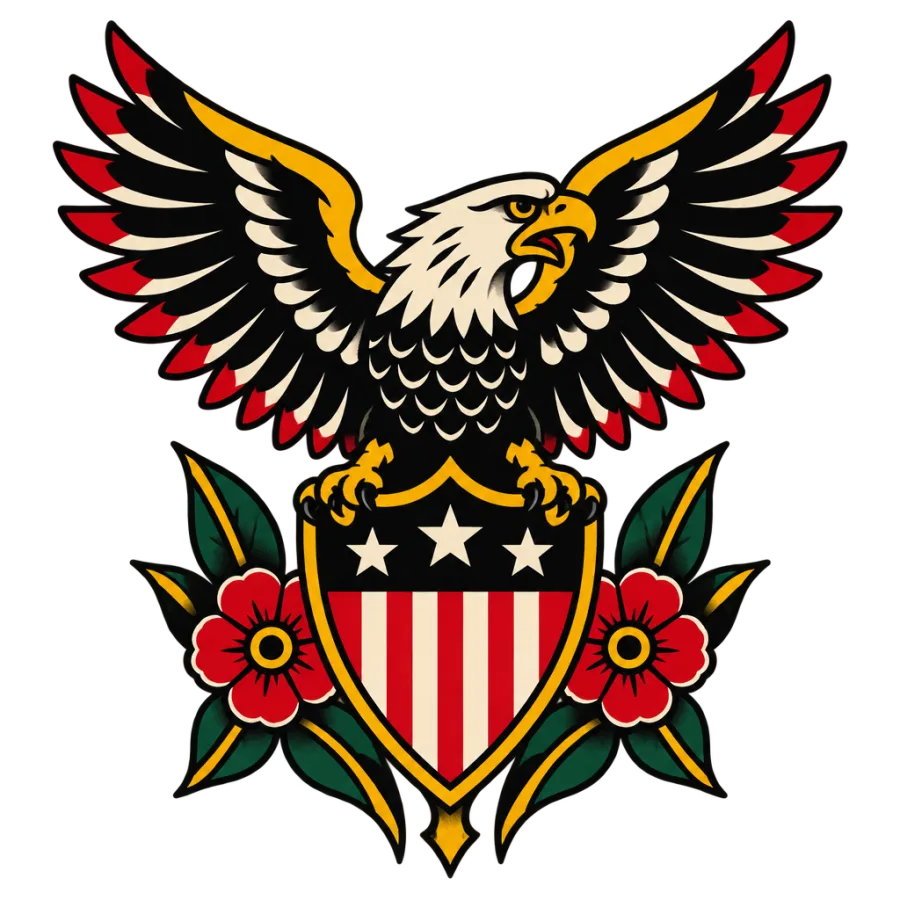
An eagle with spread wings above a shield, American traditional flash
Use this prompt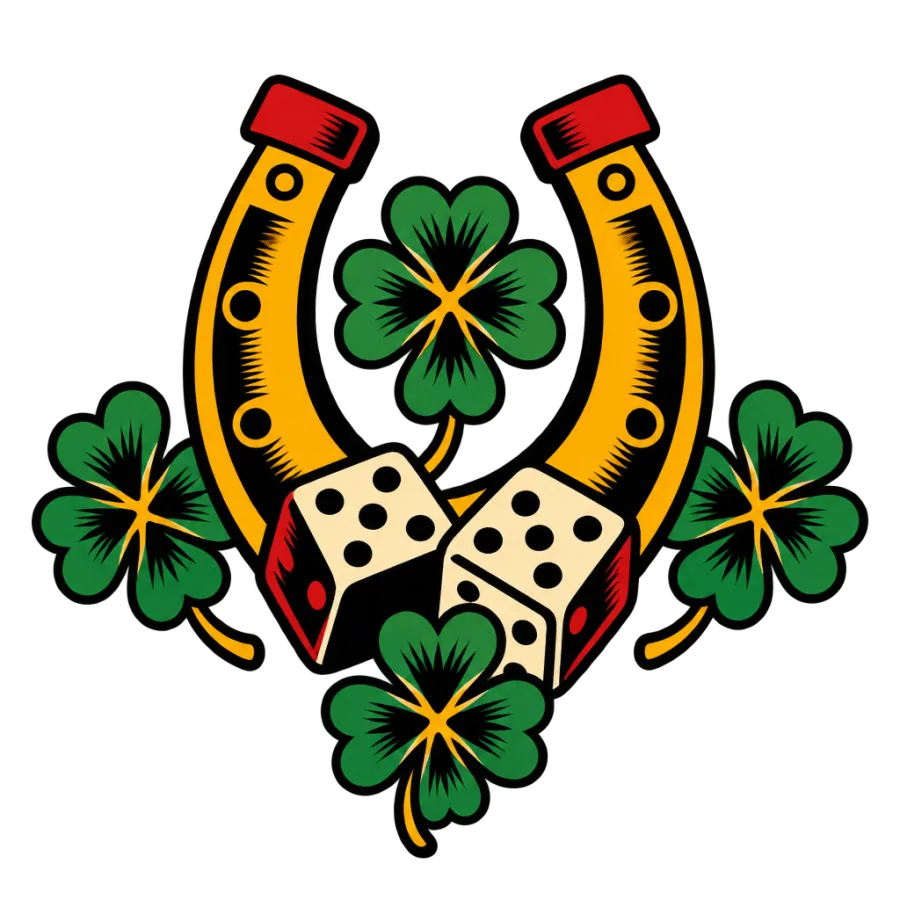
A horseshoe with clovers and dice, traditional tattoo, bold outlines
Use this prompt
A sleeping crescent moon face with stars, traditional tattoo flash
Use this prompt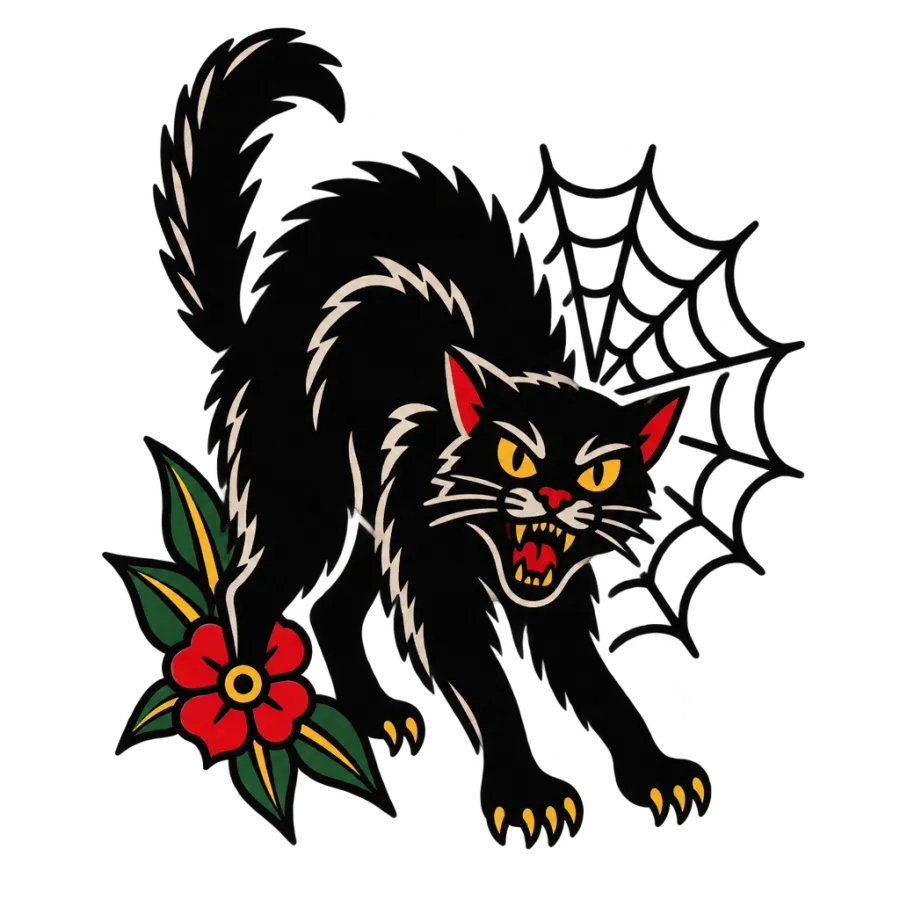
A black cat with an arched back and a spiderweb, traditional tattoo
Use this prompt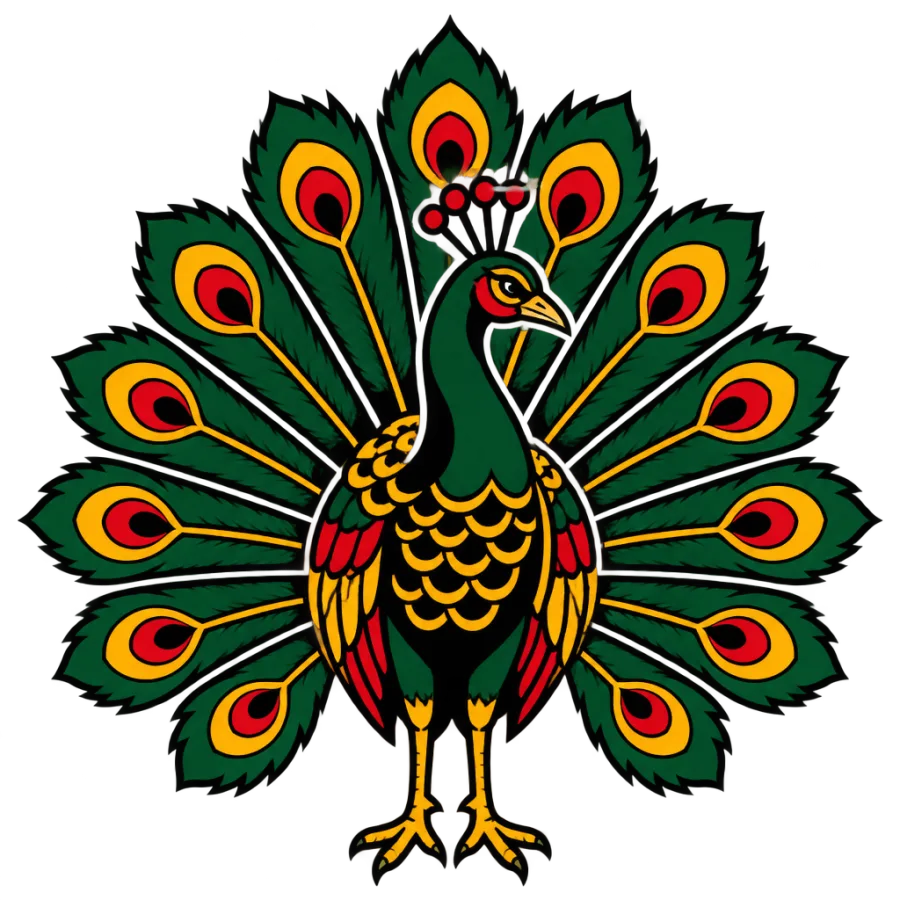
A peacock with a fanned tail, American traditional, flat bold color
Use this promptDescribe an idea of your own and get four designs back in about 20 seconds.
Open the generator
Questions people ask
Why do american traditional tattoos have such thick lines?
Because thick lines survive. Skin spreads ink slowly over decades, and a 2.5 mm outline absorbs that spread without losing its shape. The style was worked out by shop artists who watched their own tattoos age on returning customers, and they kept only the parts that still looked good.
What colors are used in traditional tattooing?
The core palette is black, red, yellow, green and a muted blue, sometimes with brown or purple added. Artists keep it small on purpose: those pigments are the most stable, and flat blocks of them read cleanly against a black outline. Yellow fades first, black holds longest.
Does american traditional hurt more than fine line?
Usually yes, because of the color packing. Solid fill means a magnum passing over the same skin many times, which turns a scratch into a hot, raw feeling. The outline itself is quick. Most people find a three hour traditional session harder than three hours of line only work.
How long before a traditional tattoo needs a touch up?
Often fifteen to twenty years with no work at all, longer for black only designs. Yellow and lighter colors look tired first, and a single color refresh session brings an older piece back. Sun exposure matters far more than age, so daily sunscreen is the cheapest maintenance there is.
Can I mix american traditional with other styles?
Yes, and artists do it constantly. Neo-traditional grew straight out of it, and traditional outlines sit well beside blackwork or dotwork filler. What rarely works is putting bold outlines and delicate fine line in the same design, because the two line weights compete and neither one wins.