Neo-traditional tattoo ideas and designs
Neo-traditional keeps the bold outline and readable silhouette of old school, then adds varied line weight, deeper color and decorative detail borrowed from Art Nouveau.
- Pain level6 / 10 on the thigh
- Healing3 to 4 weeks for color
- Typical size12 to 30 cm (5 to 12 in)
- Studio cost$600 to $1,500
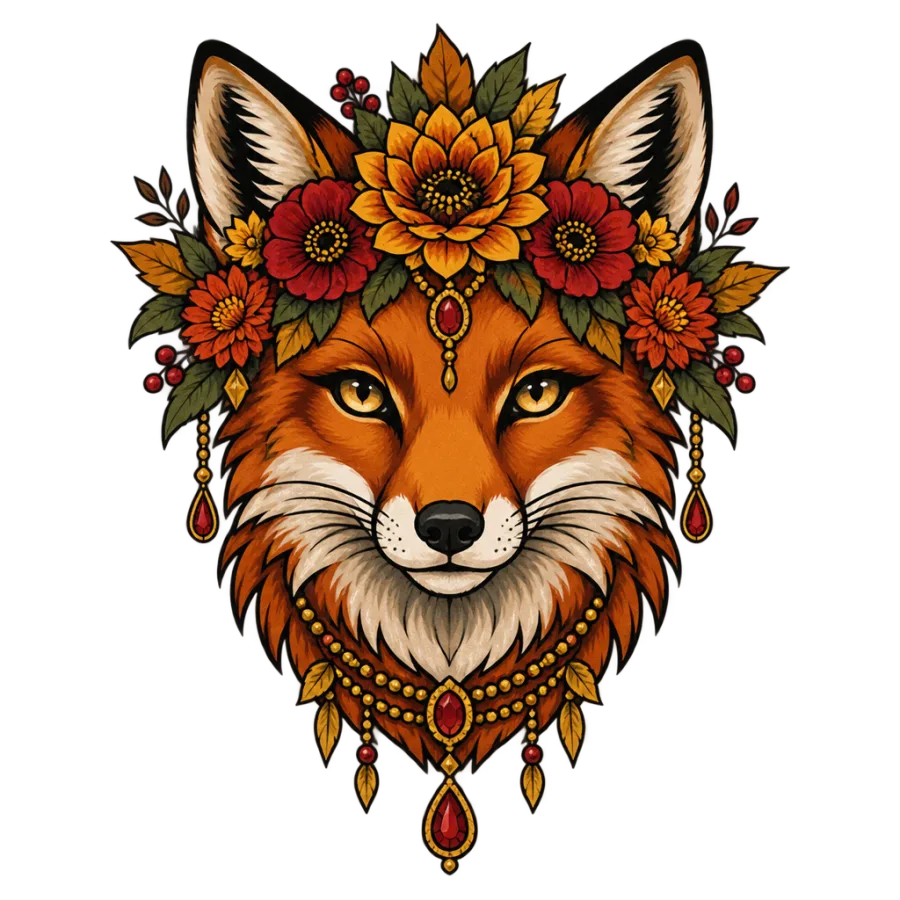
Neo-traditional took shape in the 1990s as traditional artists began pulling in Art Nouveau framing, Mucha’s ornamental borders and a far wider pigment range. The bones are unchanged: a strong black contour and a shape that reads at distance. What changed is everything inside that contour, which became layered, jewelled and much more detailed.
The style suits people who want the durability of an old school tattoo without its flatness. A neo-traditional fox wears a crown, sits inside a filigree frame and has real fur texture, but it still holds the closed silhouette that will keep it readable thirty years from now.
Line weight is the defining tool
Where american traditional uses one line weight, neo-traditional uses three or four. The outer contour might be a 9RL, internal structure a 7RL, fur or feather detail a 3RL, and decorative filigree a 1RL. That hierarchy creates depth without leaning on shading, and it is the hardest part of the style to get right.
Color is packed with magnums but blended far more than in old school work, often two or three values of one hue laid wet on wet with a 9M1 or 11M1. Many artists lay a base of black and grey first and build the color on top of it, a habit borrowed straight from realism.
How it differs from old school
- Three or four line weights instead of a single weight
- Blended color, often over a black and grey base layer
- A wider palette including teal, mauve, rust and gold ochre
- Decorative framing: filigree, gems, drapery, banners
- Real surface texture in fur, feathers and fabric folds
Subjects the style was made for
Animal portraits in profile are the signature: fox, stag, wolf, owl, moth, snake, usually crowned, framed or paired with flowers. Women’s portraits in an Art Nouveau register are the other pillar. Objects work well too, particularly anything with ornament already built into it, like a pocket watch, a perfume bottle or a hand mirror.
The style needs room for its own decoration. A neo-traditional design squeezed down to 8 cm loses the filigree first, then the texture, and what survives is a slightly fussy traditional tattoo. Plan on 12 cm at minimum, and 18 to 25 cm once the piece includes a frame or a floral surround.
How neo-traditional ages
Better than realism, not quite as well as american traditional. The bold outer contour protects the silhouette, so at fifteen years the piece still clearly reads as a crowned fox. What softens is the interior: 1RL filigree merges, fine fur texture flattens, and subtle color blends simplify into broader bands.
Artists who plan for this keep the smallest details slightly larger than strictly needed and make sure the design still works if every hairline detail eventually disappears. Ask to see healed photographs at three years or more before booking, because this is exactly where the gap between artists shows up.
Sessions, placement and cost
Outer arm, thigh, calf and the back of the shoulder suit it best, since neo-traditional wants a panel shape with a clear top and bottom. It is less happy on the inner forearm, where the narrow width crops the framing, and poorly suited to hands and fingers, where the interior detail collapses within a couple of years.
A 15 cm animal head with a frame usually runs four to six hours in one sitting. At common US rates of $150 to $250 an hour, that lands between $600 and $1,500. Large thigh panels and sleeves are multi session projects, typically $2,500 to $6,000 spread across several months with healing time between.
12 neo-traditional tattoo designs, with the prompt behind each one
Every design below came out of AI Tattoo Lab. Tap one to load its prompt into the generator, then change a word and make it yours.
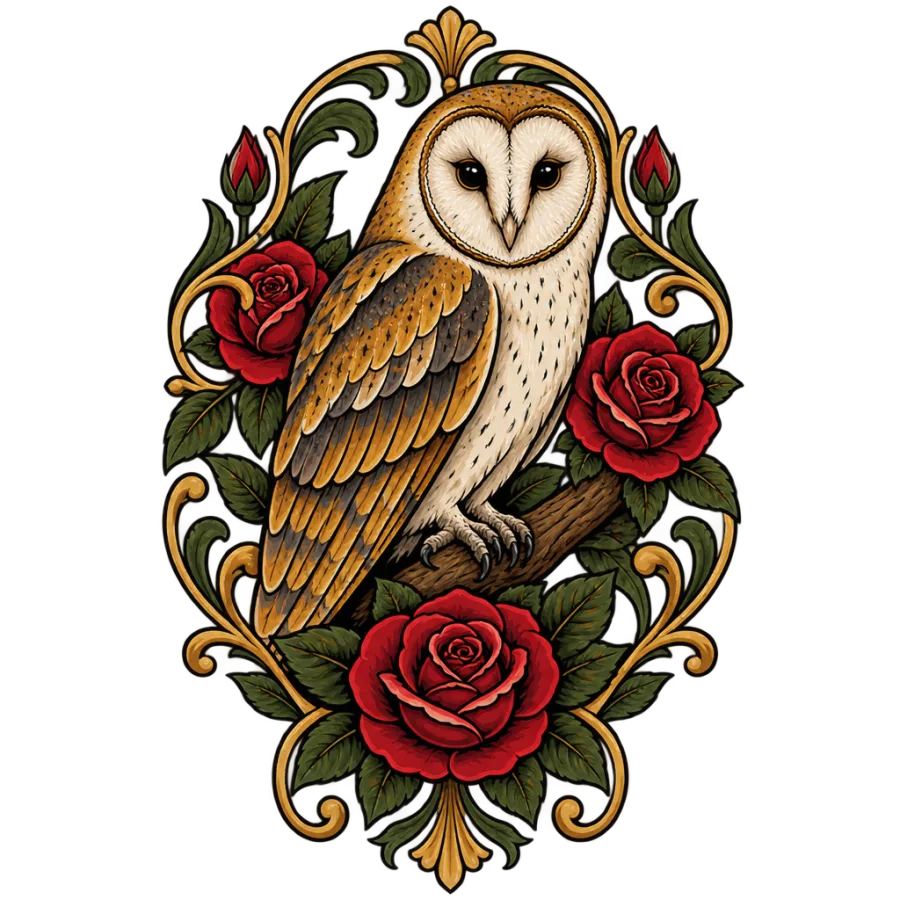
A barn owl on a branch framed by roses and filigree, neo traditional
Use this prompt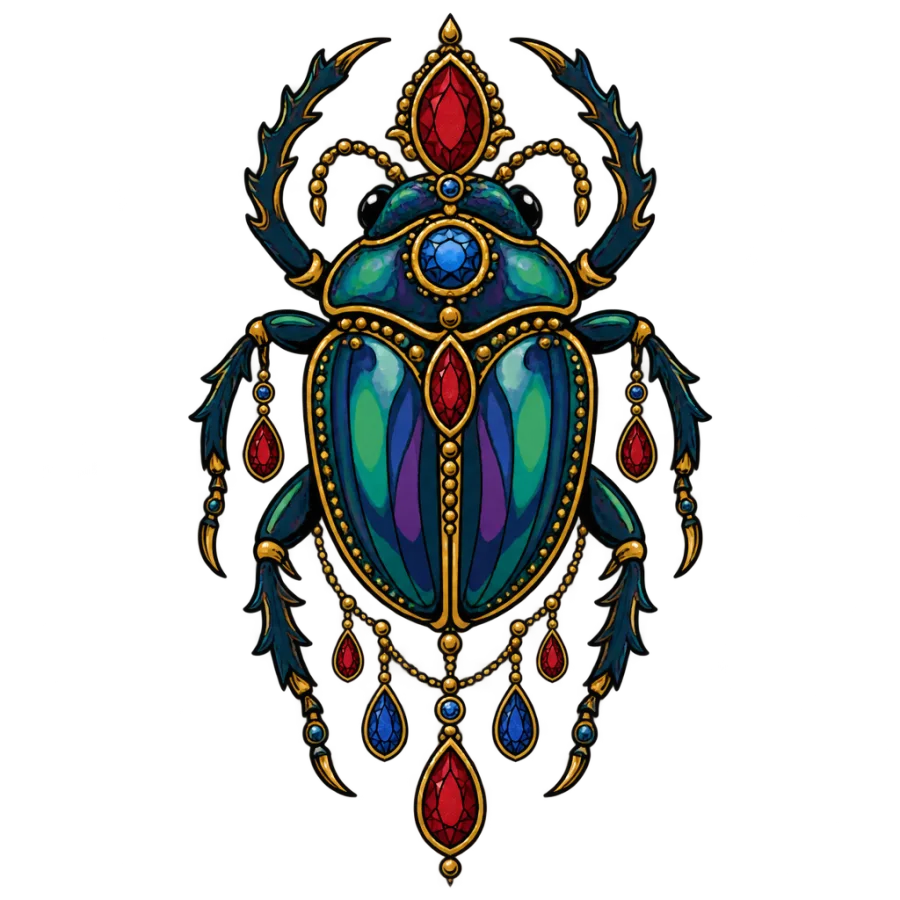
An iridescent scarab beetle set with cut gemstones, neo traditional, jewel tones
Use this prompt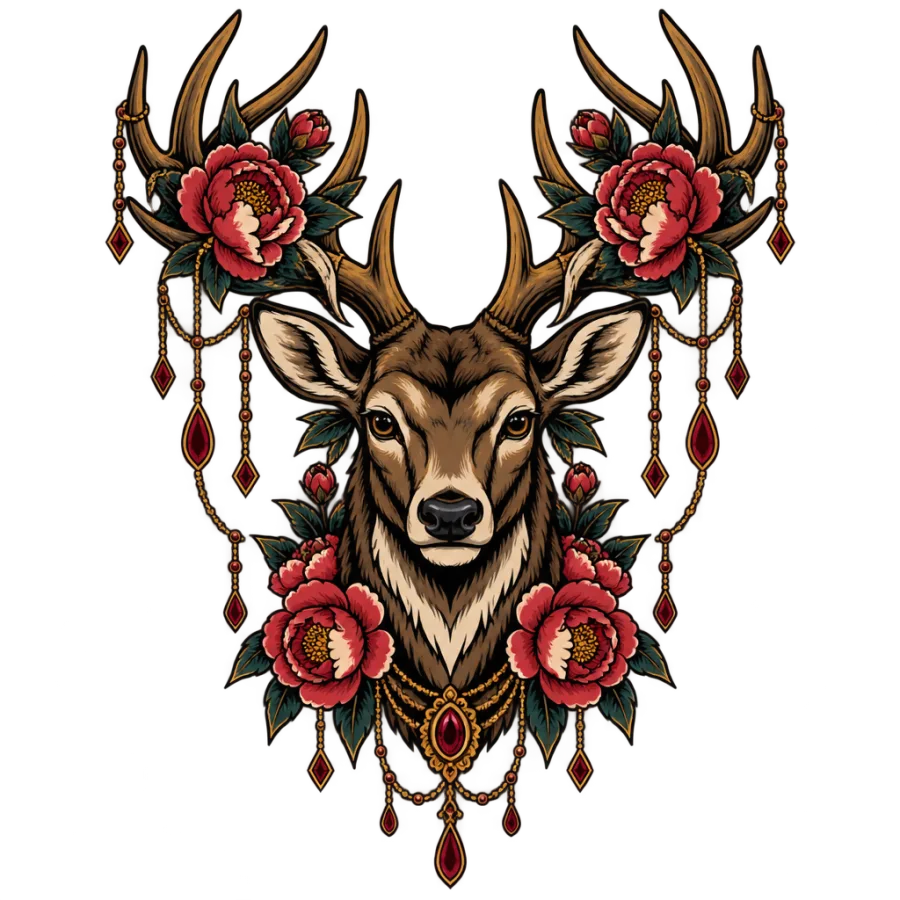
A stag head with antlers draped in peonies and chains, neo traditional, bold color
Use this prompt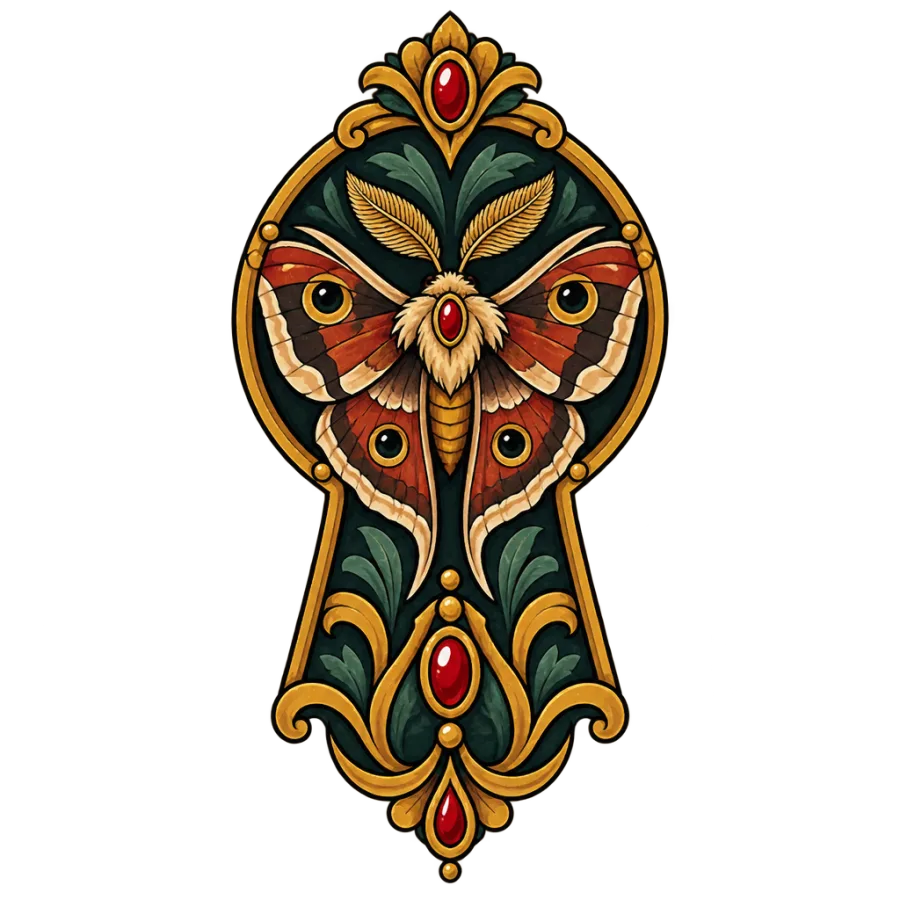
A moth framed inside an ornate keyhole, neo traditional, rich color
Use this prompt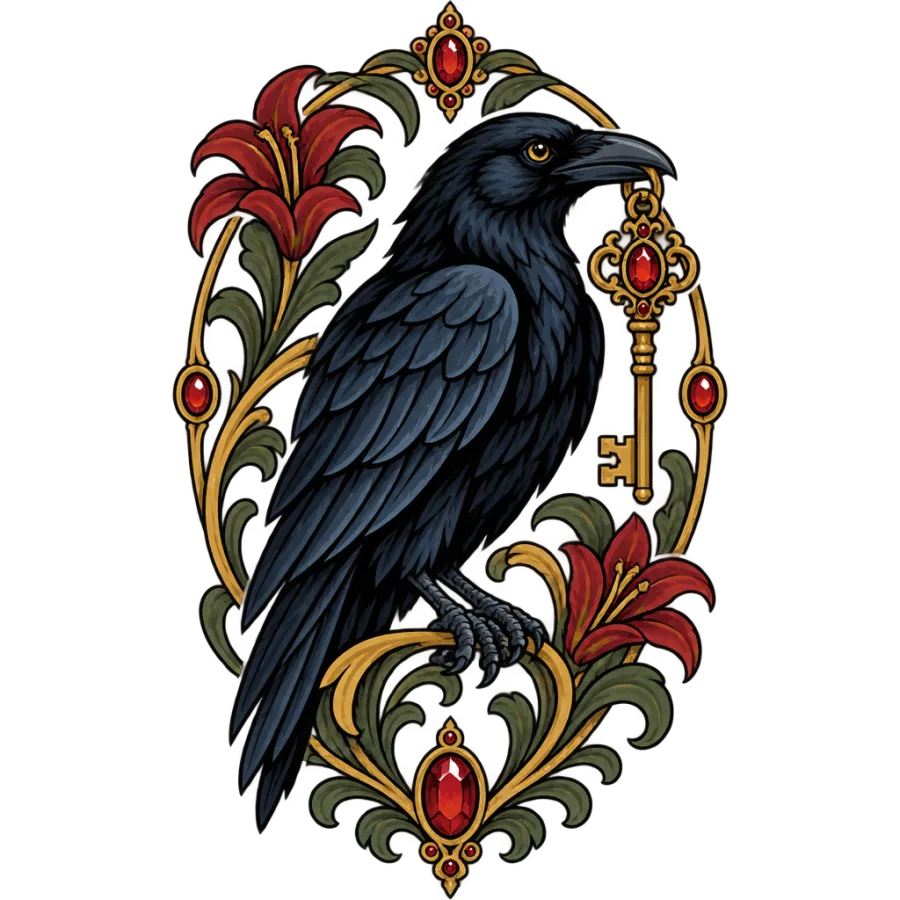
A raven holding a jeweled key with art nouveau flourishes, neo traditional
Use this prompt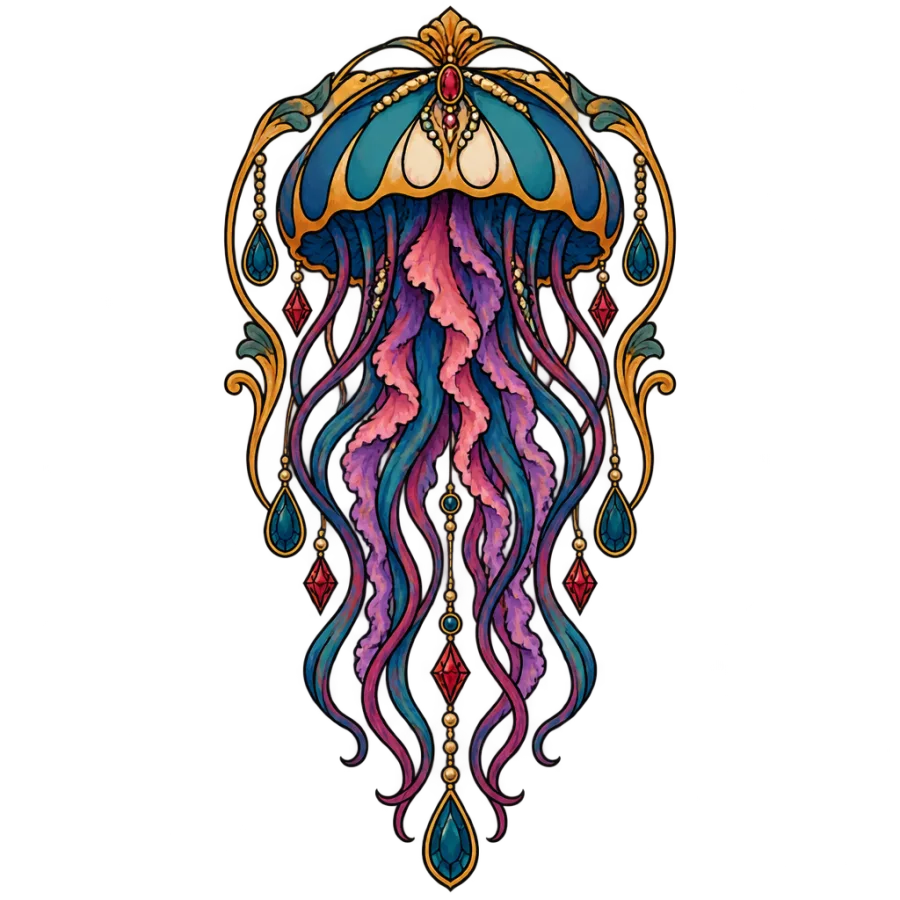
A jellyfish with flowing tentacles and hanging gems, neo traditional color
Use this prompt
Tulips in an ornate vase draped with pearls, neo traditional tattoo
Use this prompt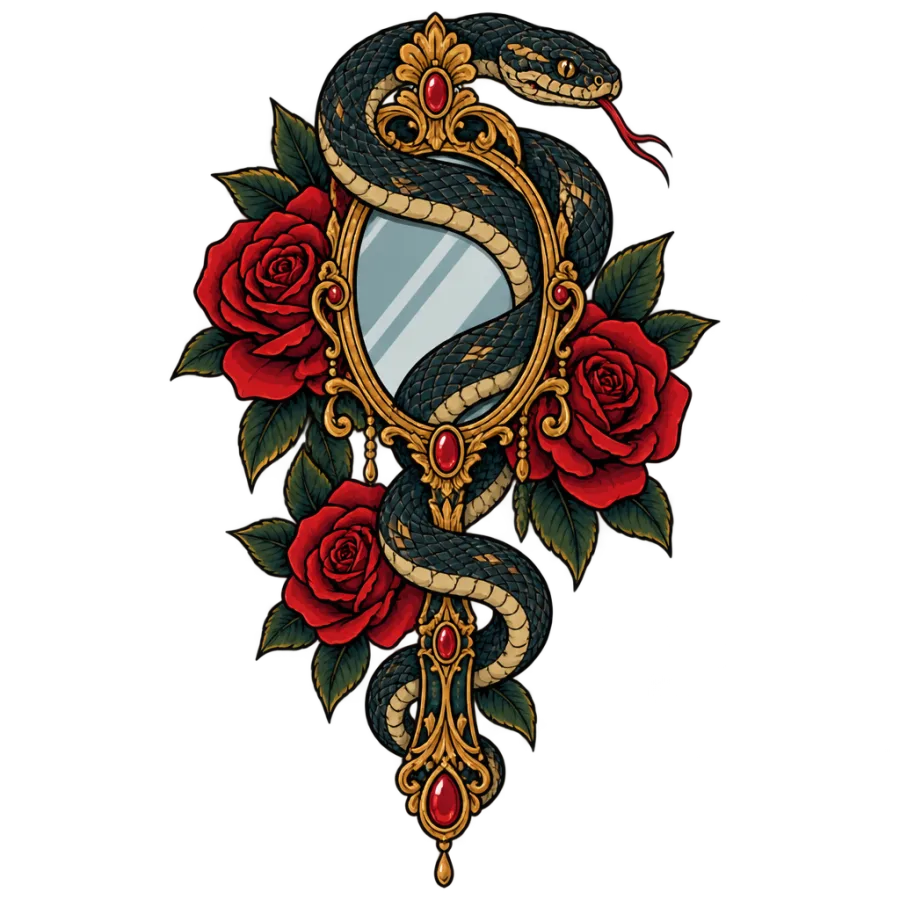
A snake winding through an ornate hand mirror with roses, neo traditional
Use this prompt
A bee with stained glass wings on a honeycomb medallion, neo traditional
Use this prompt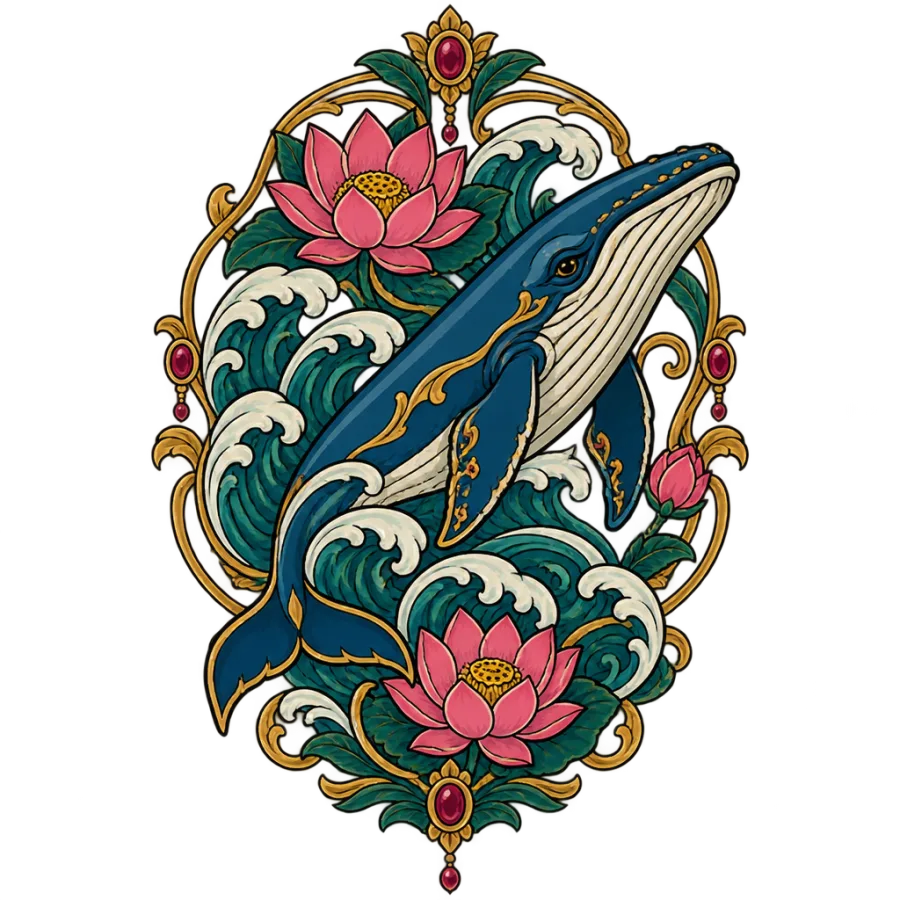
A whale swimming through art nouveau waves and lotus flowers, neo traditional
Use this prompt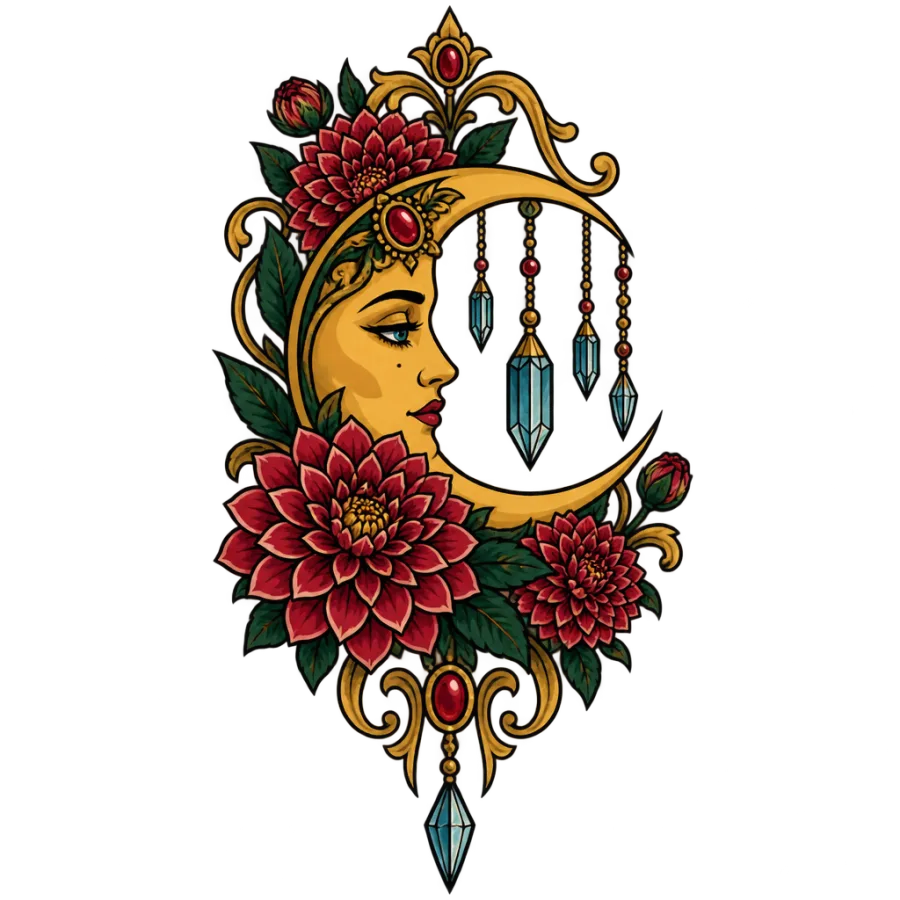
A crescent moon face with hanging crystals and dahlias, neo traditional
Use this promptDescribe an idea of your own and get four designs back in about 20 seconds.
Open the generator
Questions people ask
What is the difference between traditional and neo-traditional?
Traditional uses one line weight, flat color and about five pigments. Neo-traditional keeps the bold outer line but adds several thinner internal weights, blended color, a much wider palette and decorative framing. Both are built around a readable silhouette, which is why both age better than realism does.
How much does a neo-traditional tattoo cost?
A 15 cm framed animal head usually takes four to six hours and costs $600 to $1,500 in most US shops at $150 to $250 an hour. Larger thigh panels or sleeves run $2,500 to $6,000 across several sessions. Big city rates and in demand artists go well above that.
How small can a neo-traditional tattoo be?
Around 12 cm is a realistic floor, and closer to 18 cm if you want a frame or filigree. The style depends on layered detail inside a bold outline, and below that size the interior either gets dropped in the drawing or merges within a few years of healing.
Does neo-traditional age well?
It ages well at the silhouette level and softens in the interior. Expect the bold contour and the main color blocks to look strong at fifteen years, while the finest filigree and fur texture merge together. A good artist designs the piece so it still reads once those details go.
Is neo-traditional the same as illustrative tattooing?
Not quite. Illustrative is a broad label for anything drawn like a book illustration, with or without heavy outlines. Neo-traditional is a specific lineage out of american traditional, defined by the bold outer line, the layered internal weights and the Art Nouveau flavoured ornament around the subject.