Your first tattoo: what to expect
Most of what goes wrong with a first tattoo is decided before you sit down: the wrong artist, the wrong size, or a design you chose last Tuesday.
The short version
- Eat a proper meal 1 to 2 hours before. Never sit down hungover or on an empty stomach.
- Bring photo ID. Every licensed studio checks it, and no reputable shop tattoos anyone under 18.
- Expect the appointment to run 30 to 60 minutes longer than the quote, including stencil and setup.
- Speak up about a break, the bathroom, or a crooked stencil. Before the machine starts, not after.
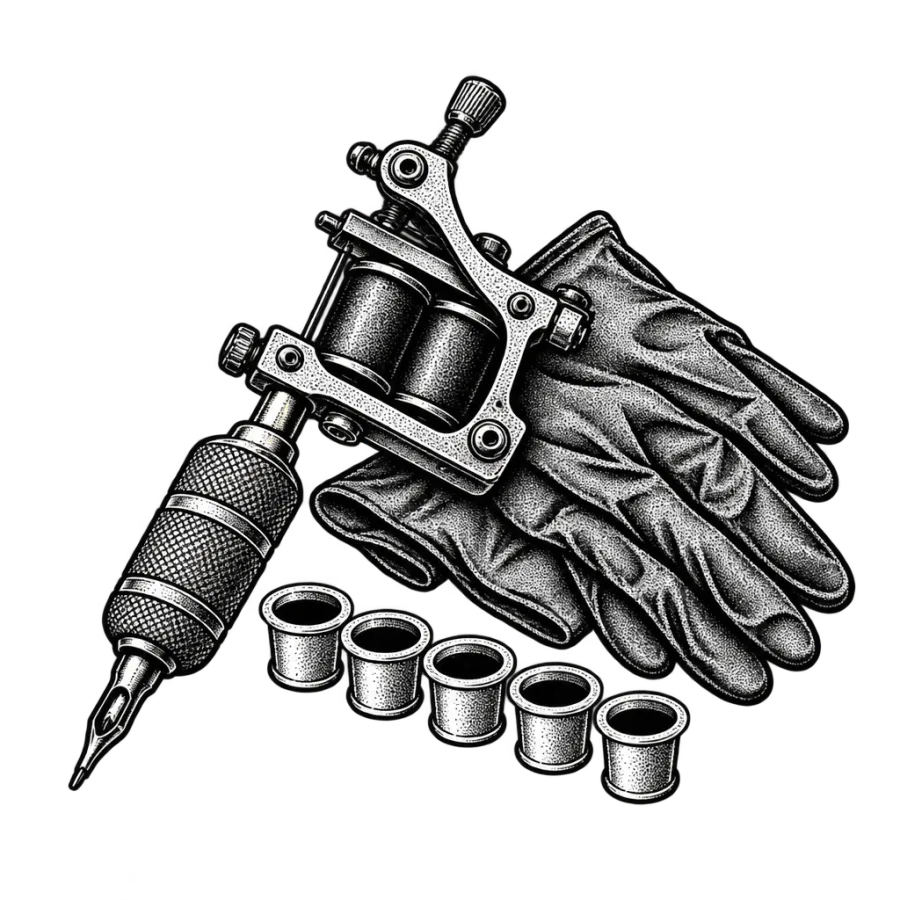
A first tattoo is a small medical procedure carried out by a stranger while you make conversation. That combination is what makes people nervous, and the nerves are almost always worse than the needle. Most first timers describe the sensation as a hot scratch, closer to a cat scratch dragged slowly than to anything sharp.
What you can control is preparation: sleep, food, water, clothing, and a design you have sat with for at least a month. What you cannot control is how your particular skin takes ink and how long the piece really needs. Go in expecting the appointment to run longer than the quote and you will have a good day.
Choosing the design, and sizing it honestly
The rule that prevents most regrets is simple: live with the idea for three months before booking. Not the exact drawing, the idea. If a concept still interests you in October that you found in July, it will probably still interest you in ten years. Trends age badly, and the internet forgets far faster than your skin does.
Then size it up. First timers almost always go too small. Ink spreads slightly over decades as it settles, and fine detail packed into 4 cm turns into a dark blur by year ten. A design with six separate elements needs roughly 12 to 15 cm, which is 5 to 6 inches, to still read from a couple of metres away in twenty years. If your artist suggests going bigger, they are protecting the work, not upselling you.
Sensible placements for a first tattoo
- Outer forearm: low pain, heals easily, covered by a sleeve at work.
- Outer upper arm: forgiving skin, low friction, ages well.
- Calf: flat, mild pain for most people, out of sight in trousers.
- Upper back or shoulder blade: a large flat canvas that fades slowly.
- Leave ribs, feet, hands, sternum and inner bicep for your third tattoo.
The week before
Keep the skin at the site normal. Moisturise it daily but not on the morning itself, do not shave it raw, and above all do not get sunburned. A studio will refuse to tattoo peeling or burned skin and will keep your deposit, correctly. If you use retinoids on that area, stop about a week ahead.
Sort out the medical questions in advance. If you take blood thinners, have a heart condition, are pregnant or breastfeeding, have used isotretinoin in the last six to twelve months, or have eczema or psoriasis at the site, say so when you book rather than at the front desk. Some of those mean rescheduling, and finding out on the day wastes everyone's afternoon.
Skip these before your appointment
- Alcohol for 24 hours. It thins blood and makes the skin push ink back out.
- Aspirin and ibuprofen for 24 hours, for the same reason. Paracetamol is fine.
- Sunbeds and long beach days for two weeks before.
- Heavy gym work on the morning of, which leaves you dehydrated and shaky.
- Starting a new diet or fasting the week of. This is not the week for it.
The day of: eat, sleep, dress
Sleep properly the night before. Tired people sit badly and feel pain more sharply. Eat a real meal with protein and carbohydrate 1 to 2 hours ahead, not a coffee and a protein bar. Blood sugar is the difference between a calm three hours and a light headed forty minutes that ends the session early.
Dress for the placement rather than the weather. A thigh piece means shorts or loose trousers. A rib or back piece means something you can move aside comfortably, and it is worth telling the studio in advance so they can set up the room. Dark clothes hide ink transfer, and studios run cold, so bring a layer.
What to bring
- Photo ID, every time, even if you clearly look forty.
- Cash for the tip, since card tipping is not always offered.
- Water and a snack with sugar in it for anything over two hours.
- Headphones and something to watch or listen to for long sittings.
- A phone charger, because you will be there longer than you think.
What happens when you arrive
You will fill in a consent and medical form: ID check, date of birth, allergies, medication, medical conditions, pregnancy, and a signature confirming you are sober and doing this voluntarily. Read it rather than scribbling through it. Then the artist prints or draws the stencil, shaves and cleans the area, and applies the stencil with a transfer solution.
The stencil stage is the one people rush and later regret. Stand in front of a mirror. Move the limb. Sit down and stand up. Look at it from two metres away rather than at arm's length, because that is the distance everyone else will see it from. If the angle is wrong, say so now. Restencilling takes two minutes. Fixing a crooked tattoo takes a laser.
What it actually feels like
Lining feels like a hot scratch. Shading feels duller and warmer, more like a graze being rubbed. Neither is the sharp stabbing people imagine before their first session. The first ninety seconds are the worst part psychologically, and most people settle once they realise the sensation is boring rather than frightening.
Pain climbs with time, not with intensity. One hour on a forearm is a mild annoyance. The same spot at hour four is genuinely tiring, because the area is inflamed and your adrenaline has run out. That is why long pieces are booked with breaks, and why nobody should schedule a first tattoo as an eight hour day.
| Area | Out of 10 | Why |
|---|---|---|
| Outer forearm | 3 to 4 | Thick skin, muscle underneath, few nerve endings |
| Outer thigh | 3 to 4 | Fat padding, flat surface, easy to sit still for |
| Outer upper arm | 4 | Soft tissue, more sensitive toward the inner edge |
| Shoulder blade | 4 to 5 | Flat, but sharp where it crosses the bone |
| Inner forearm | 5 | Thinner skin and more nerves nearer the wrist |
| Ribs | 8 | Bone under thin skin, plus constant breathing movement |
How to sit still, and when to speak up
Sitting still is a skill and nobody warns first timers about it. Breathe out slowly through the painful passes instead of holding your breath, which is what makes people faint. Keep the limb relaxed and heavy rather than braced, because a tense muscle moves in small jerks the artist has to work around. Let your artist position you, then stop helping.
Say something the moment you feel cold, sweaty, tingling in your hands, or a rushing sound in your ears. That is a vasovagal response, it is common, and it is fixed in three minutes with sugar and a reclined chair. Nobody is impressed by toughing it out, and every artist would rather pause for five minutes than catch you.
Worth saying out loud
- I need a break. Every artist expects this on a long sitting.
- I need the bathroom. Say it between passes, not mid line.
- The stencil looks crooked to me. Always before the machine starts.
- This spot hurts much more than the rest. They can often change the angle.
- I am feeling light headed. Say it early, not once you have gone grey.
Leaving the studio
You will be wrapped in either second skin film or a simple dressing and handed aftercare instructions. Ask two specific questions before you leave: exactly how many hours until I take this off, and what should I put on it. Written instructions beat memory, and studio advice varies enough that following a random video instead is how people end up with infections.
Pay, tip 15 to 25 percent in cash if you are in the US, and take a photo in good daylight before the swelling settles. Then ask about the touch up policy. Most studios include one free touch up within three to six months, and most first tattoos never need it. If any colour does drop out, book the follow up at six to eight weeks.
Questions people ask
How much does a first tattoo hurt?
Less than most people expect. On a forearm or outer thigh, most first timers rate it 3 or 4 out of 10, closer to a hot scratch than a sharp stab. Pain builds with time rather than intensity, so one hour is easy and four hours is tiring. Ribs, feet, hands and the sternum are the genuinely painful spots.
How old do you have to be to get a tattoo?
Eighteen across the United States for a tattoo without parental involvement, and a handful of states allow it younger only with a parent present and signing. Every licensed studio checks photo ID with no exceptions and will refuse a convincing fake. A shop that does not ask for ID is telling you exactly what its other standards look like.
Should I eat before getting a tattoo?
Yes. Eat a full meal with protein and carbohydrate 1 to 2 hours before, and bring a sugary snack for anything longer than two hours. Low blood sugar is the most common reason people feel faint in the chair. Drink water through the day as well, and skip alcohol for the 24 hours beforehand.
How long does a first tattoo take?
Longer than the tattooing itself. Budget about 45 minutes for paperwork, stencil placement and setup before the machine starts. A palm sized piece is usually 1 to 3 hours of actual work. Ask your artist for a realistic finish time, then keep your evening clear, because almost every appointment runs over.
Can I bring a friend to my tattoo appointment?
Ask first. Many studios allow one person, some allow none, and most have less space than you would guess. A calm friend genuinely helps on a first tattoo. A nervous one who keeps asking whether it hurts does not. Never bring children, and never turn up with a group that has nowhere to sit.